
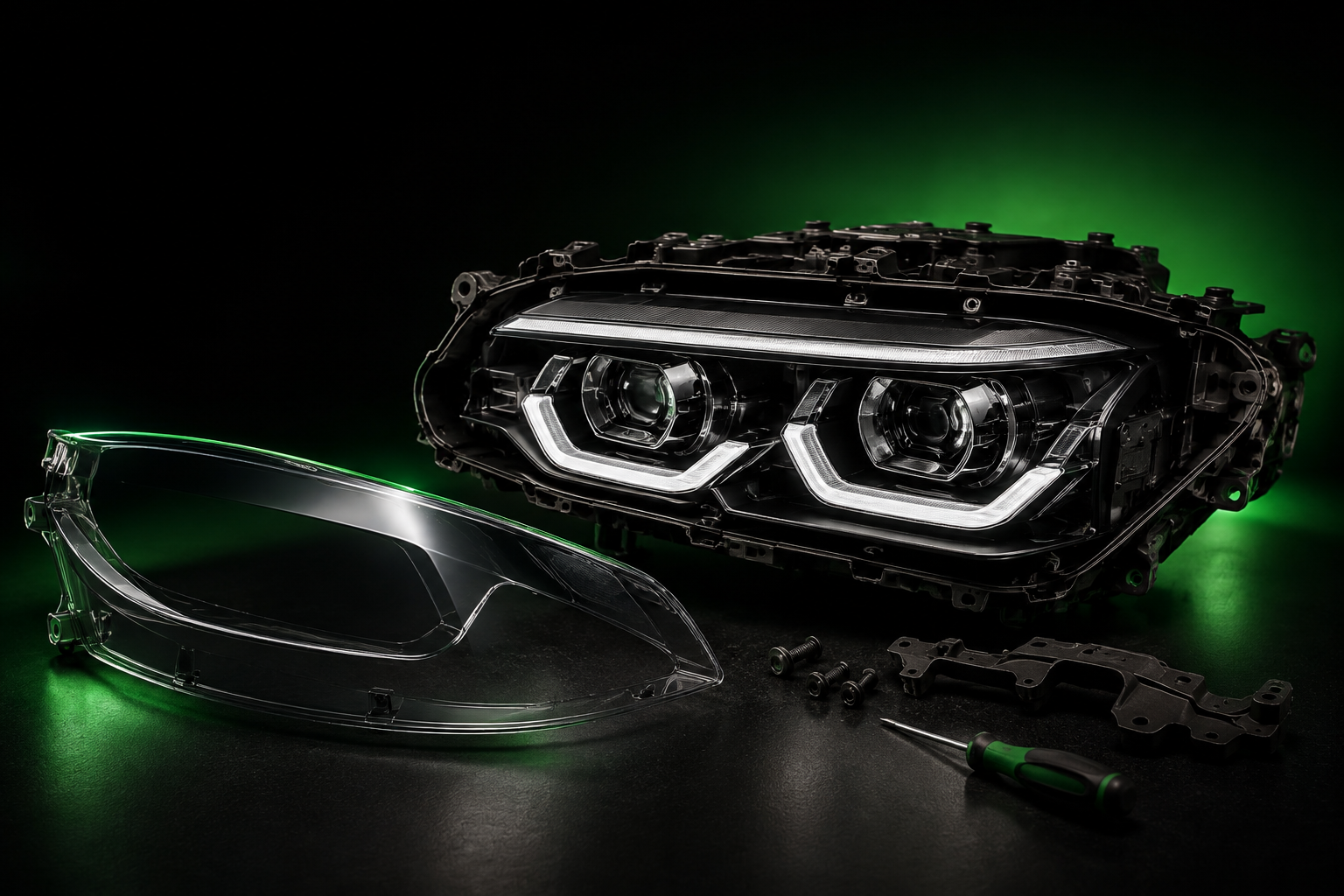
Moisture inside a headlight can appear for several reasons. Some temporary misting may disappear naturally, while persistent condensation or visible water usually indicates that the headlight should be inspected.
Why moisture gets inside a headlight
Modern headlight assemblies are not simply sealed plastic boxes. They use ventilation systems to manage pressure and temperature changes. Problems can develop when vents are blocked, seals deteriorate, housings are cracked or previous repairs were not sealed correctly.
Condensation versus water ingress
A light temporary mist can occur after temperature changes. Heavy condensation, droplets that remain for long periods or water collecting at the bottom of the housing are different signs and should not be ignored.
Why delaying repair can become expensive
Moisture can affect LED components, control modules, wiring, reflectors and electronic boards. Addressing the cause early can help prevent damage to more expensive components inside the headlight.
How the problem should be approached
The headlight should be inspected for damaged housings, lenses, vents, seals and previous repair work. The correct solution depends on the actual source of the moisture rather than simply drying the headlight temporarily.